Geothermal energy:
Geothermal energy is produced by tapping into the thermal energy created and stored within the earth.
Almost everywhere, the shallow ground or upper 10 feet of the Earth's surface maintains a nearly constant temperature between 50° and 60°F (10° and 16°C). Geothermal heat pumps can tap into this resource to heat and cool buildings. A geothermal heat pump system consists of a heat pump, an air delivery system (ductwork), and a heat exchanger-a system of pipes buried in the shallow ground near the building.
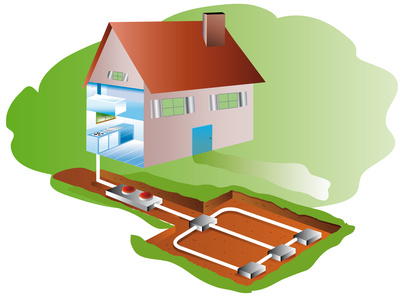
In the winter, the heat pump removes heat from the heat exchanger and pumps it into the indoor air delivery system. In the summer, the process is reversed, and the heat pump moves heat from the indoor air into the heat exchanger. The heat removed from the indoor air during the summer can also be used to provide a free source of hot water.
Geothermal power is cost effective, reliable, sustainable, and environmentally friendly. Geothermal wells release greenhouse gases trapped deep within the earth, but these emissions are much lower per energy unit than those of fossil fuels. As a result, geothermal power has the potential to help mitigate global warming if widely deployed in place of fossil fuels.
What does it mean "heat pumps" ?
Heat pumps are designed to move thermal energy opposite to the direction of spontaneous heat flow by absorbing heat from a cold space and releasing it to a warmer one, and vice-versa. A heat pump uses some amount of external power to accomplish the work of transferring energy from the heat source to the heat sink.
